
In development for the Mac
Learn it. Keep it.
Amaranth is a study app for university students. It turns your lectures, slides and readings into practice, and brings each idea back just before it fades.
See how it works
The idea
Colour stands for memory.
We already talk about minds in colour. A bright student. A brilliant idea. A vivid memory. A detail that has faded.
Amaranth takes that literally. How much colour a thing has is how well you know it. A new course opens almost colourless and colours in as you learn. When something starts to slip it fades, and a review brings it back.
Day 9Solid. About 95% likely to recall. It would now last about 10 days.
Try it. Drag forward and the tile fades. Review, and the colour comes back and lasts longer than it did before. The dots are your reviews. This is an illustration with a simple forgetting curve, using the app's own lines between shaky, solid and mastered.
- Mastered remembered across weeks
- Solid remembered across days
- Learning met, not yet kept
- Shaky missed or faded, so it comes first
- Not started
How it works
Your course in. Practice out.
Bring your course in
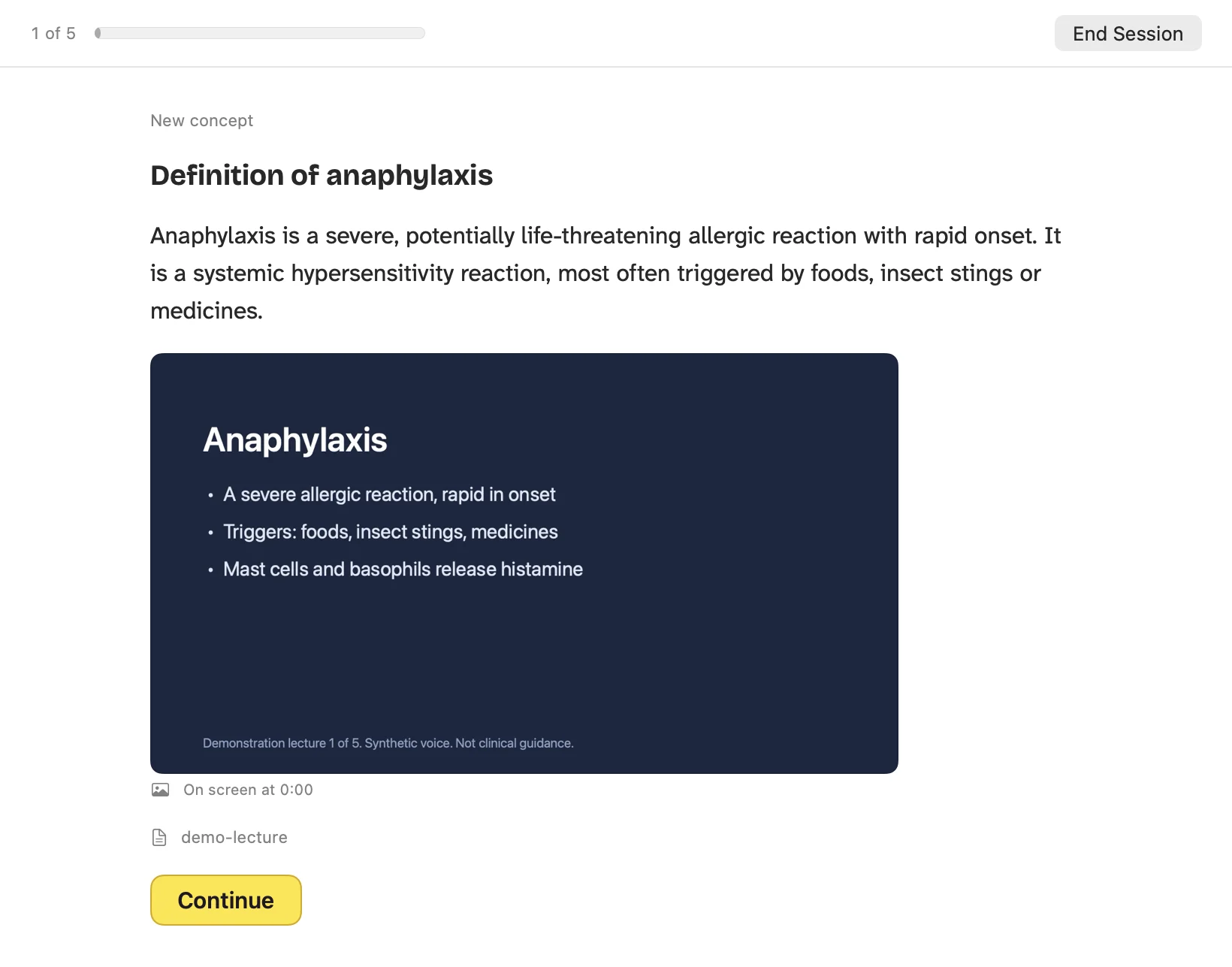
Lecture recordings, slides, PDFs, Word and PowerPoint files, and your own notes. Recordings are transcribed on your Mac, and a lesson shows the slide that was on screen when the words were said.
Practise
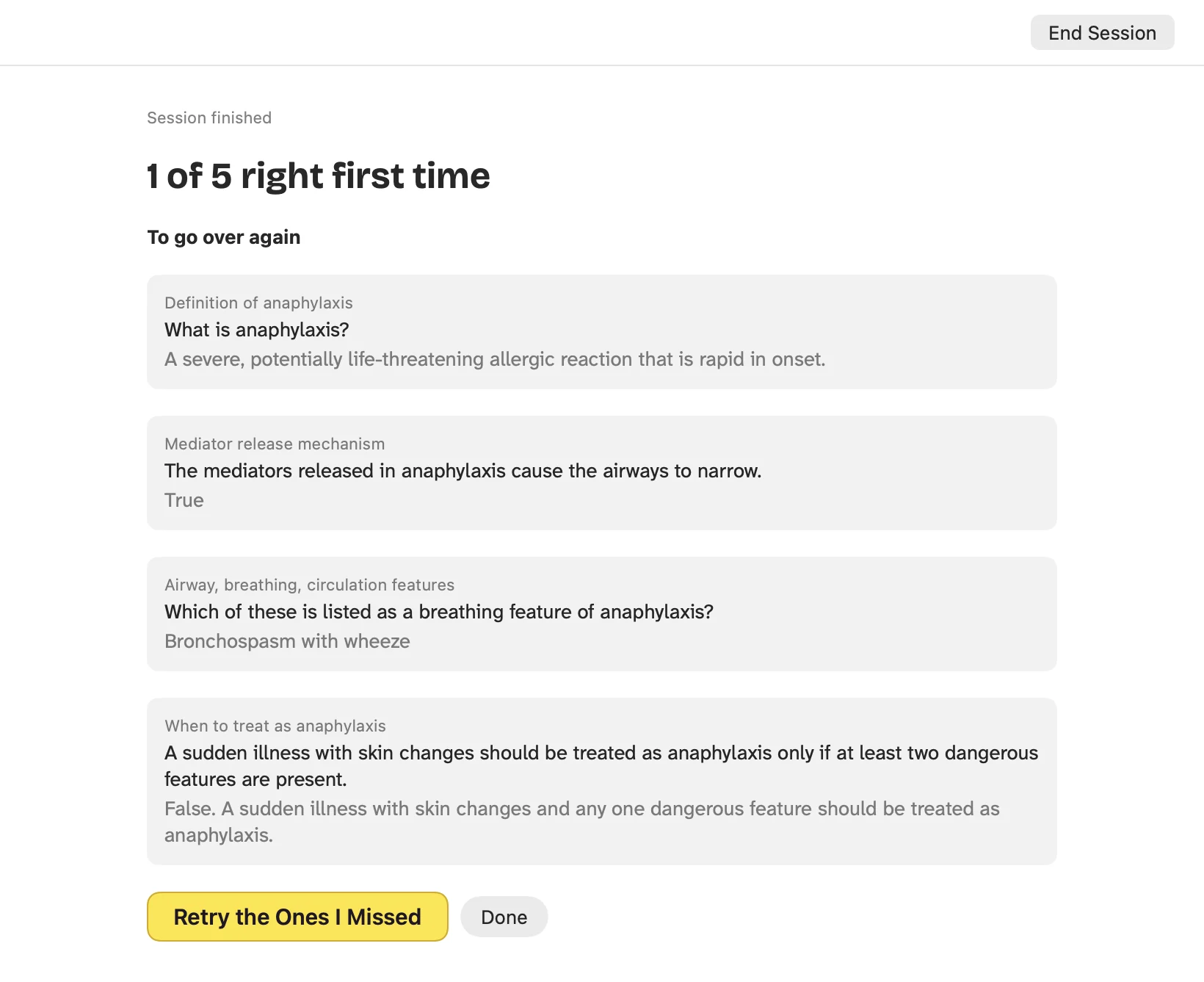
Short lessons, then flashcards, fill-the-gap and true-or-false questions, and a matching game. You can explain a concept in your own words and get feedback against your source. With Claude as the engine it also writes multiple-choice and applied questions, and timed mock exams.
Keep it
For every concept the app tracks three things separately: whether you can recall it, whether you understand it, and whether you can apply it. Each one comes back before it fades, often as a different question.
Proof in black and white.
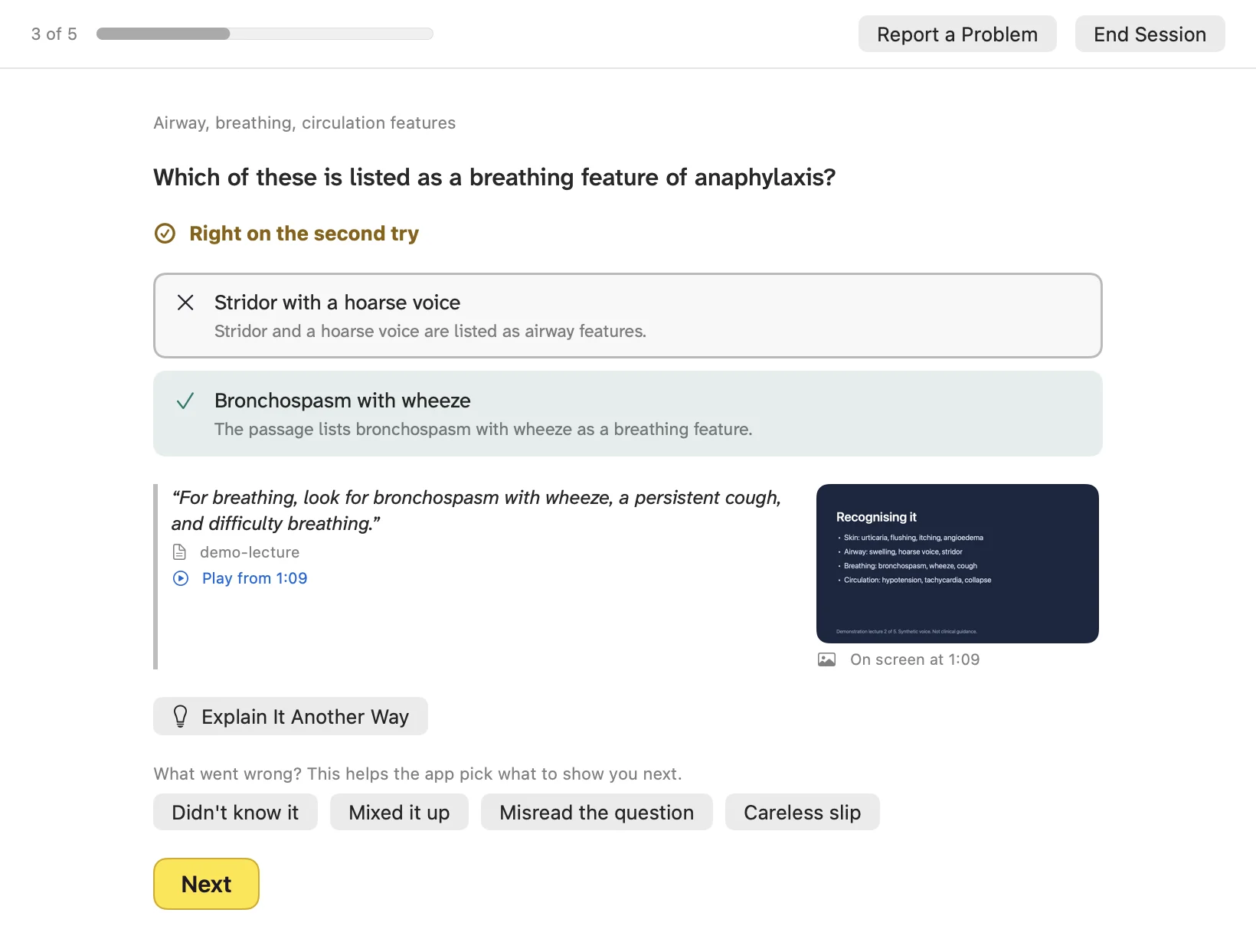
Every question quotes the sentence in your own material that proves the answer, and shows where it came from. A recording opens at the moment the words were said.
Nothing is taken on trust. A question is not kept unless its quote can be found in your source.

Honest numbers.
Three figures come first, never blended into one score. Two of them stay blank until there is enough behind them.
Beside them sit two harder tests. A delayed check: one question on each concept is held back from practice and asked a week after you first studied it, to show what has really stuck. And your last mock exam. When the course has an exam coming, a sixth figure says how much of the whole course you could recall today.

Getting it wrong
Wrong is never red.
Red is how school punished mistakes. Here a mistake is the method. A wrong answer has no colour yet: plain ink, an empty outline, and the words. Then you have another go.
The yellow is a highlighter. It marks the one most useful thing to do next, and what is slipping.
An old idea
Learning was always dyeing.
Amaranth is Greek, amárantos: unfading. The Greeks gave the name to a flower that was said never to lose its colour. The idea behind the app is older than the app. These are in our words, with where to find them.
To learn something, and to practise it at the right times: is that not a pleasure?
Confucius, Analects 1.1Good teaching should take like a fast dye. Prepare the wool properly and no washing gets the colour out.
Plato, Republic 429d to 430bWhat we have to learn to do, we learn by doing.
Aristotle, Nicomachean Ethics 2.1Wool takes some colours at one dip. Others it only holds after being soaked again and again.
Seneca, Letters to Lucilius 71The mind is dyed by its thoughts.
Marcus Aurelius, Meditations 5.16
Where it is up to
Being built now.

Amaranth is in development and cannot be downloaded yet. This page will say when that changes.
Claude needs your own Anthropic key and is paid per use. The free model needs to be available on your Mac.
With the free engine nothing leaves it. With Claude, the text of your material is sent to Anthropic to write the lessons and questions.